Residual Living
M.Arch Thesis 2016
Residual Living is a provocation that rejects the individual housing unit as the building block of collective life. Instead, it elevates the shared, interstitial spaces between units.
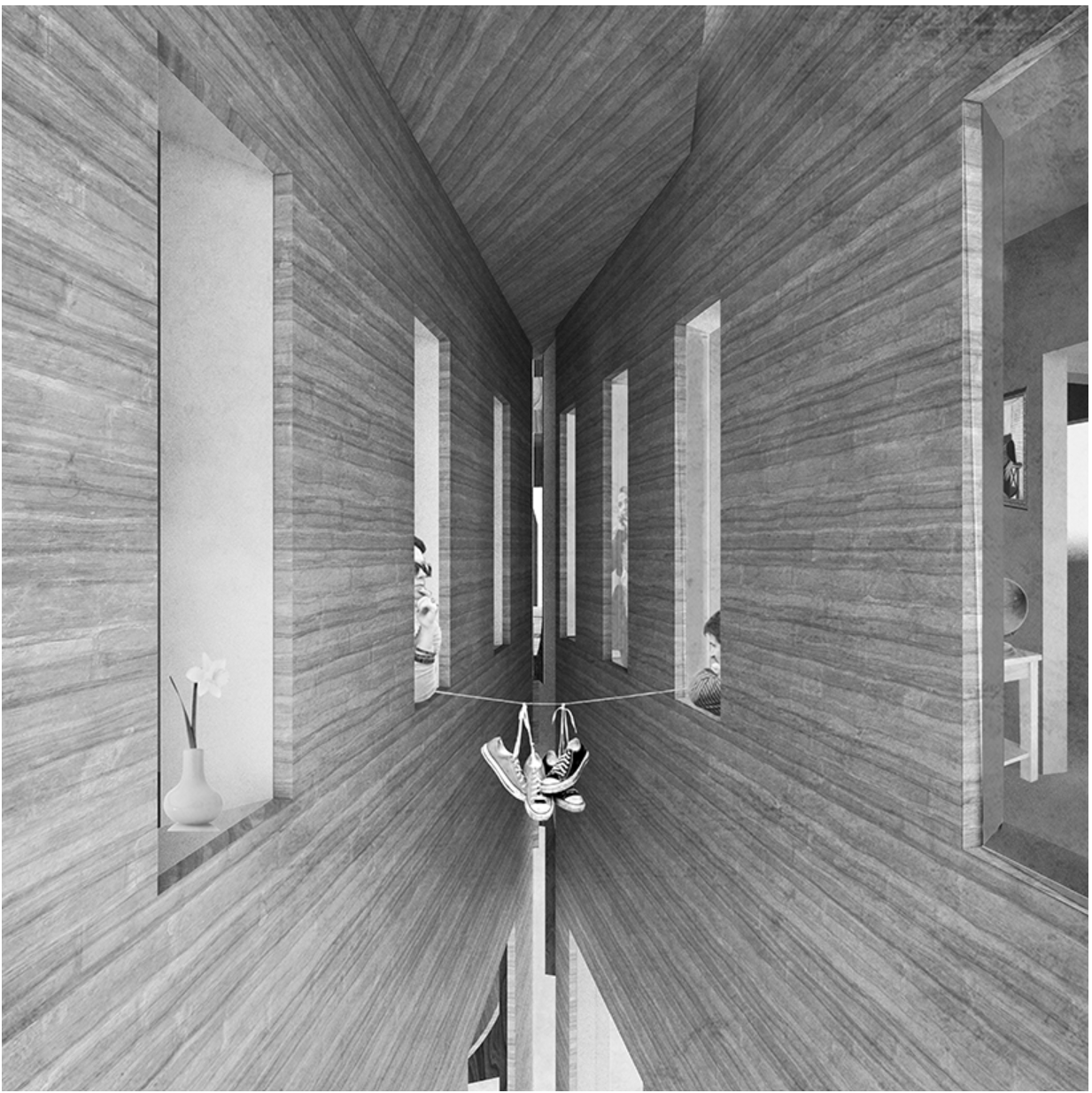
The project explores how adjacency, overlap, and proximity can produce new spatial conditions for cohabitation—ones that are neither fully public nor entirely private, but something in-between.
Housing is the threshold that defines our public and domestic lives, and it is therefore the point where the public realm begins. If the aggregation of housing is re-shifted to provide ‘in-between’, or interstitial spaces between units, then new types of public realms can be created. If their conception of public is smaller, then people have more agency over it, and their public space becomes domesticated.
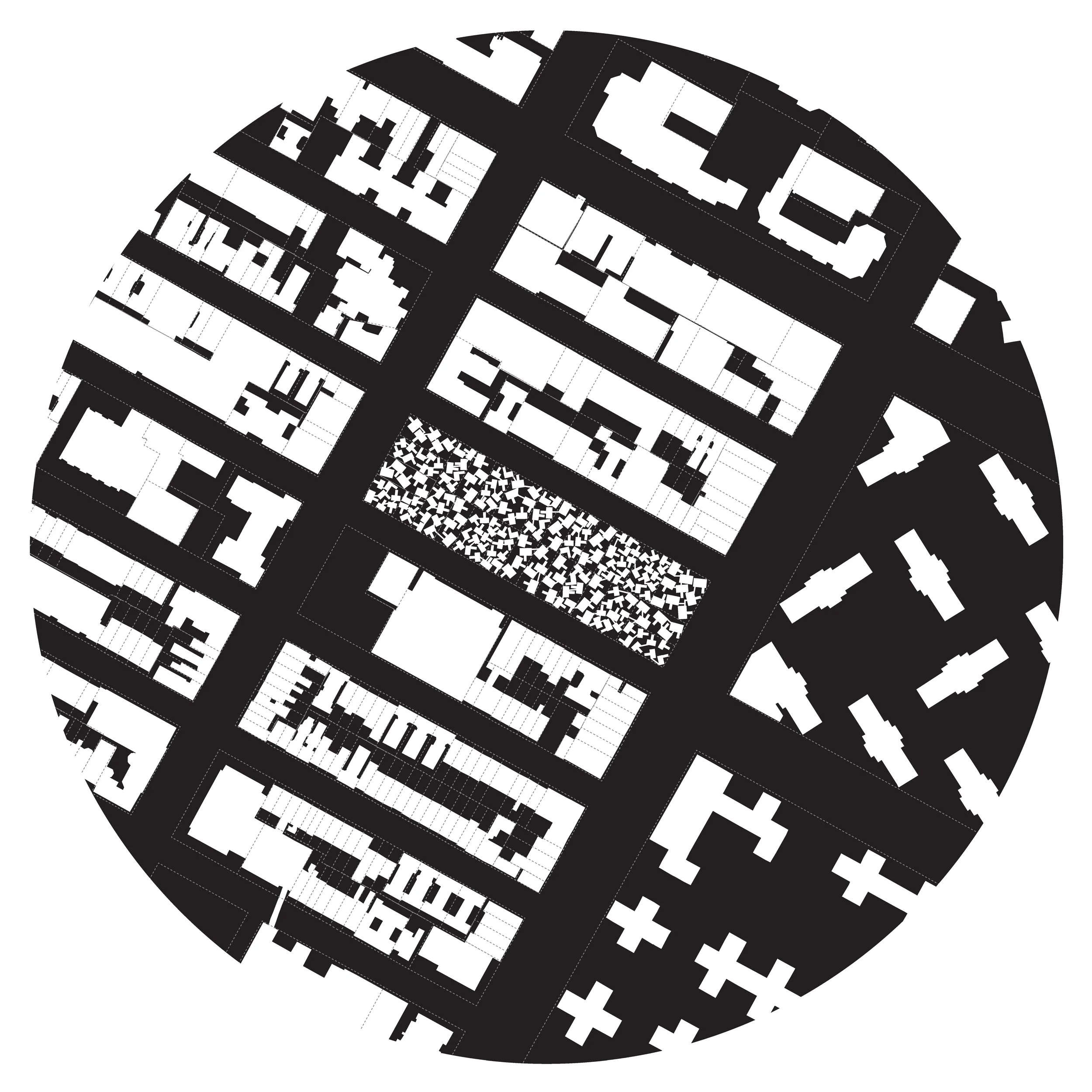
Set within New York City’s housing fabric, Residual Living responds to a legacy of efficiency and separation—units aligned for lot coverage, light, air, and code. This project inverts that logic, privileging shared thresholds over privacy, and spatial looseness over containment.
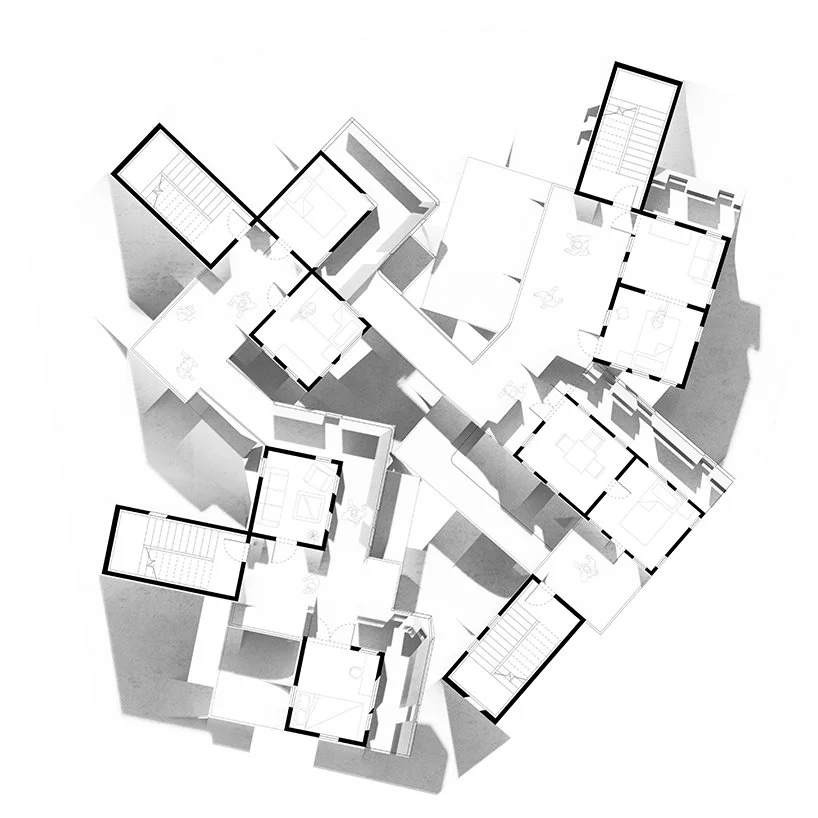
The site—a Manhattan block between tenements and tower-in-the-park housing—serves as a hinge between typologies. Identical units occupy each lot, but instead of isolation, the design re-aggregates the block around interstitial space.
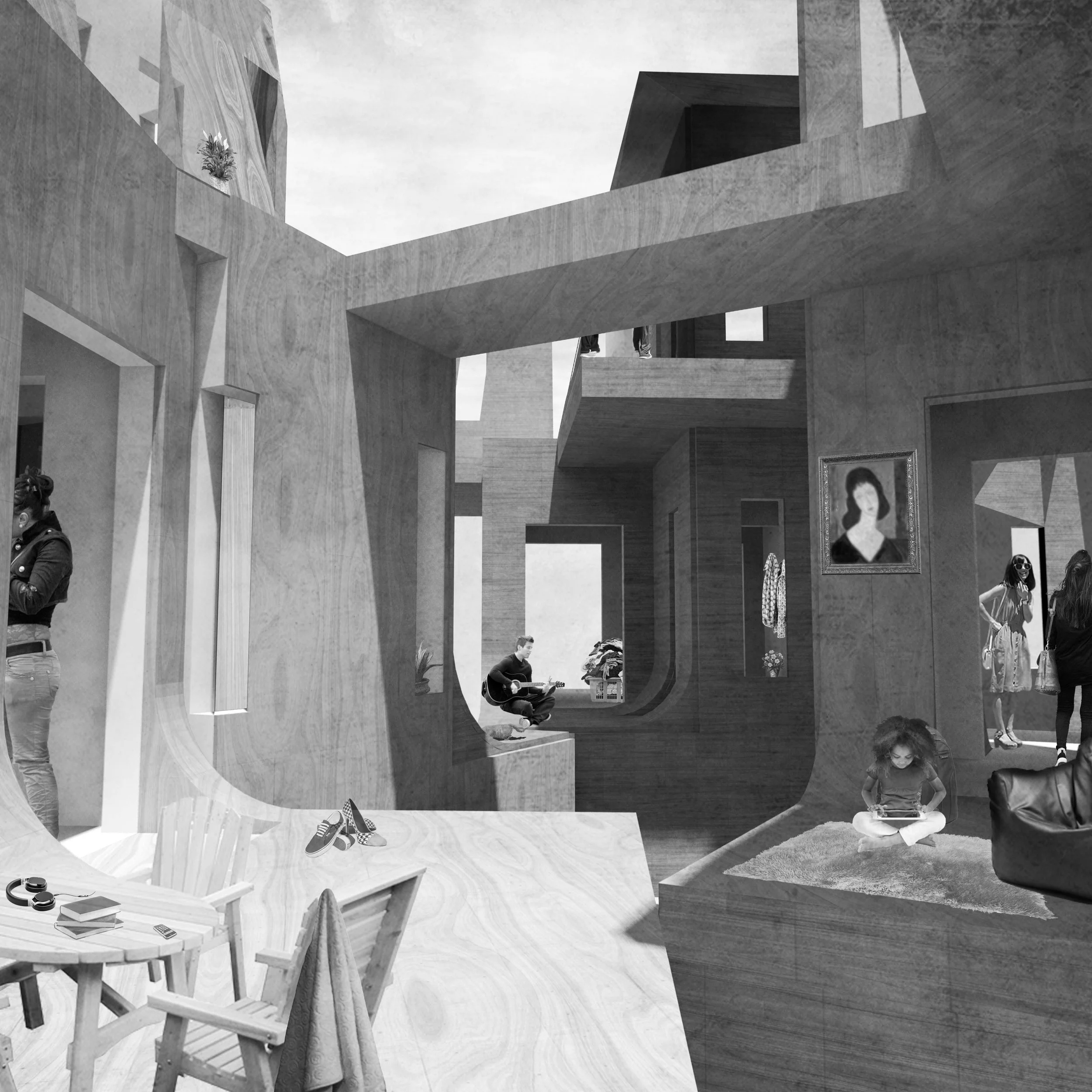
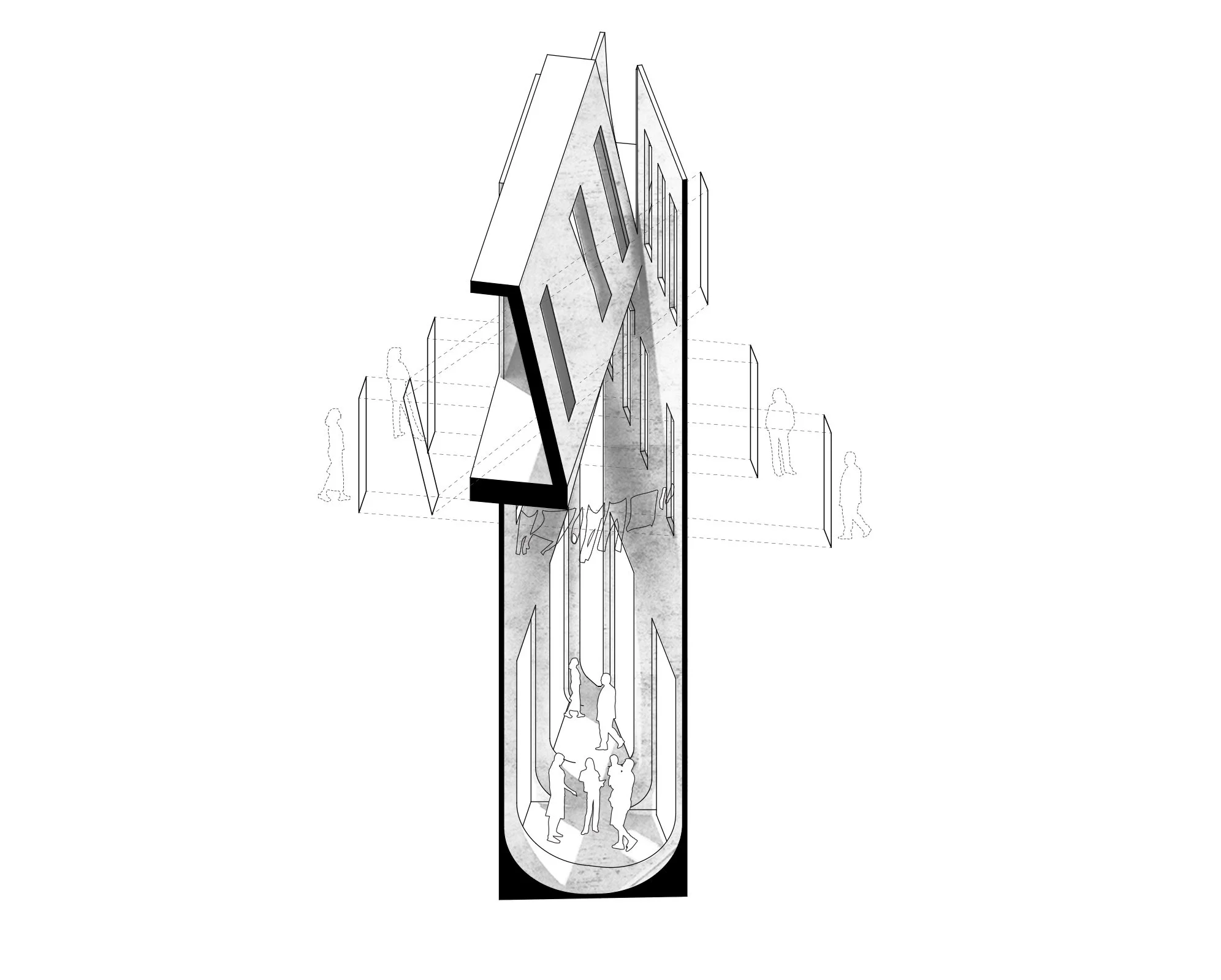
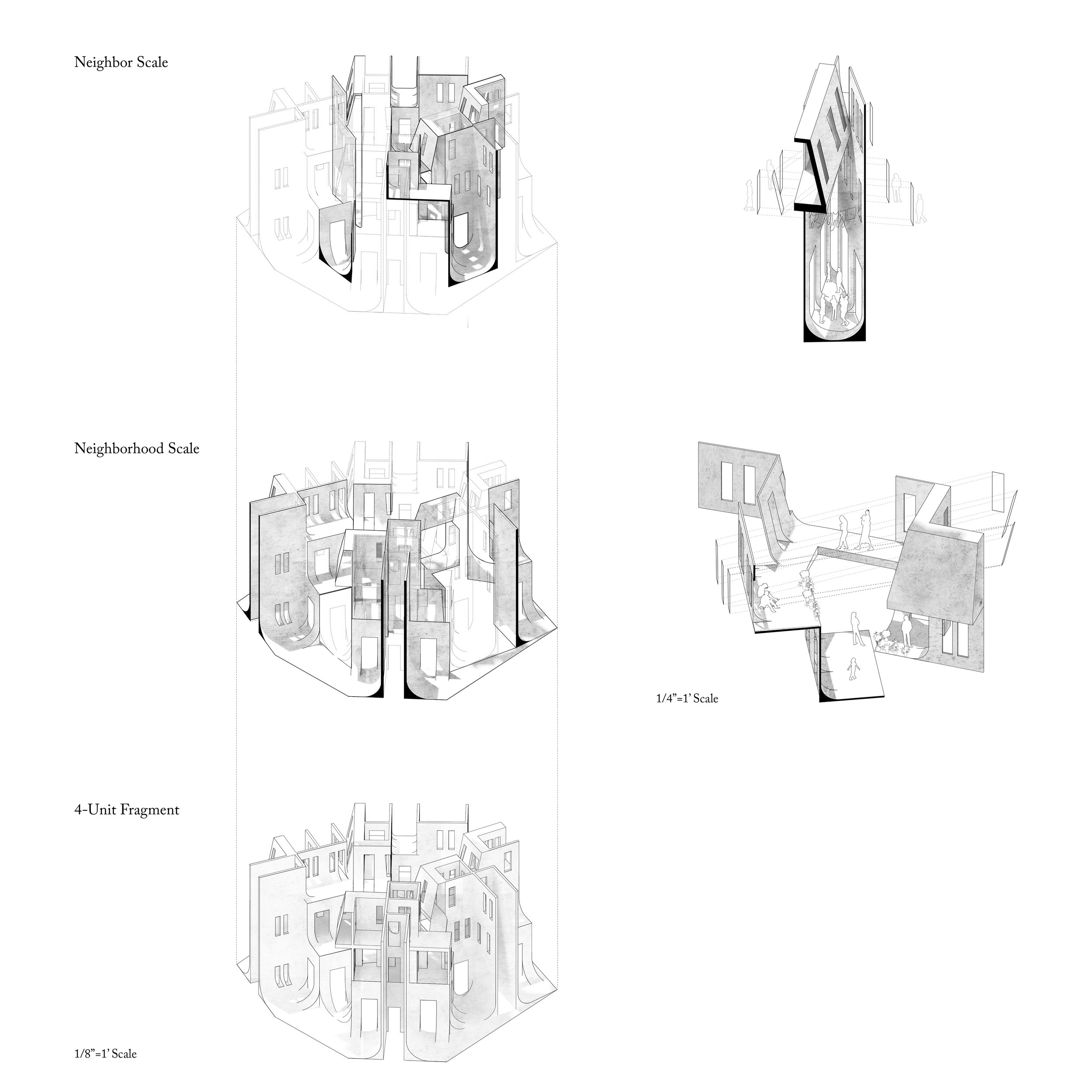
Rectilinear interiors contrast with curved, irregular voids between them—spaces that function not as leftovers, but as spatial commons. In plan and section, these shared voids blur the line between domestic and urban, unit and neighborhood.
The shared spaces fall into two scales: neighbor and neighborhood. At the neighborhood scale, loosely arranged units form larger shared volumes—spaces for gathering, movement, and visual connection. Balconies and walkways extend the domestic outward, weaving across these voids to link units both physically and socially—tracing new paths of adjacency and collective life.