Local Organics Loop
Completed at Urban Design Forum Forefront Fellowship 2022-2023
Collaboration with Alexandra Burkhardt, Fernando Canteli de Castro, Graci Mills, Marisa Prefer, and Miryam Shemwell
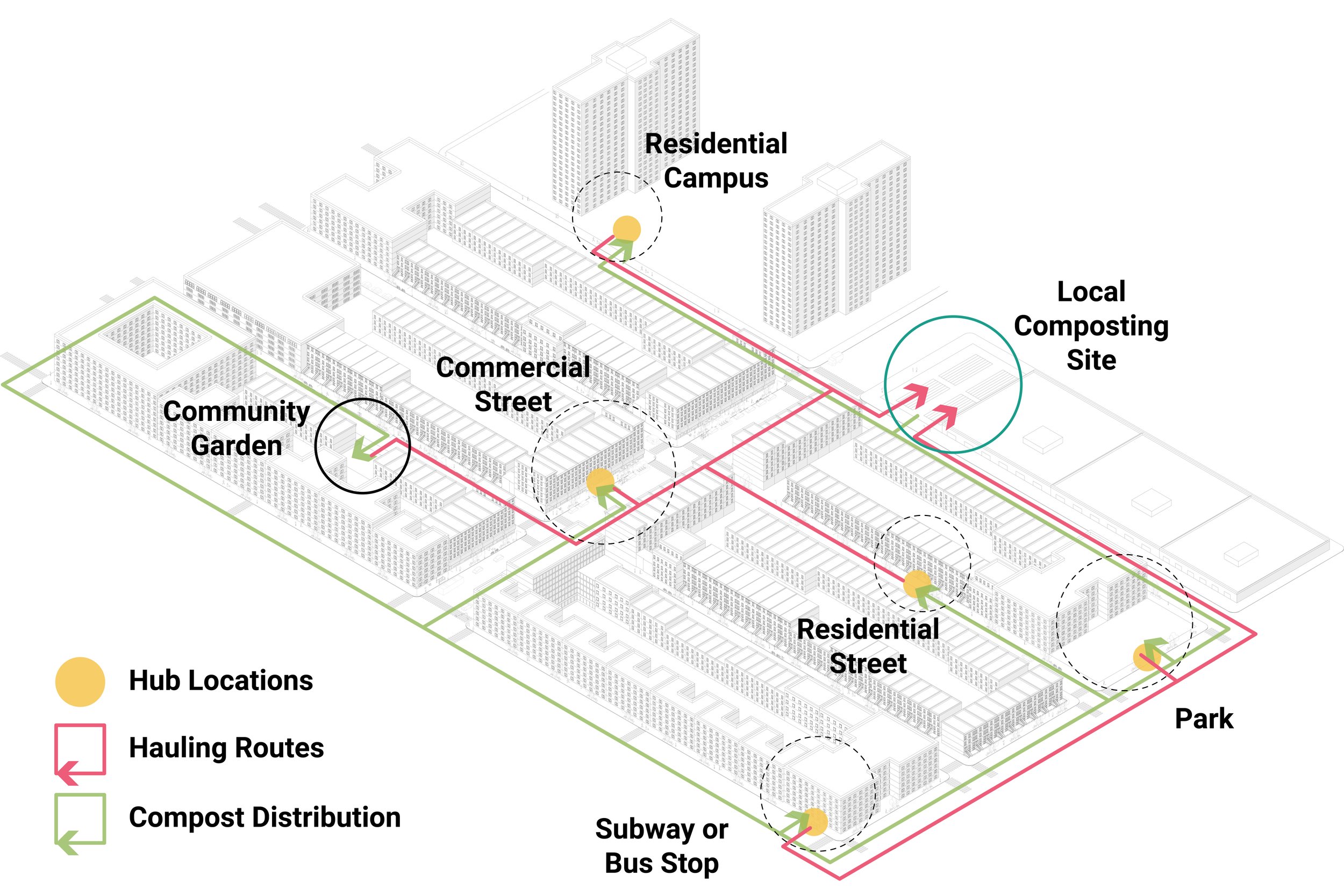
The Local Organics Loop reimagines neighborhood composting as a decentralized, street-level infrastructure for public life. For decades, organics collection in New York City has been a grassroots effort—led by residents and rooted in community care. As the city embarks on mandating residential organics separation, these local networks must move from the margins to the core.
Developed during my 2022–23 Forefront Fellowship with the Urban Design Forum, the project proposes a citywide network of neighborhood-scale hubs embedded in and activating the public realm.
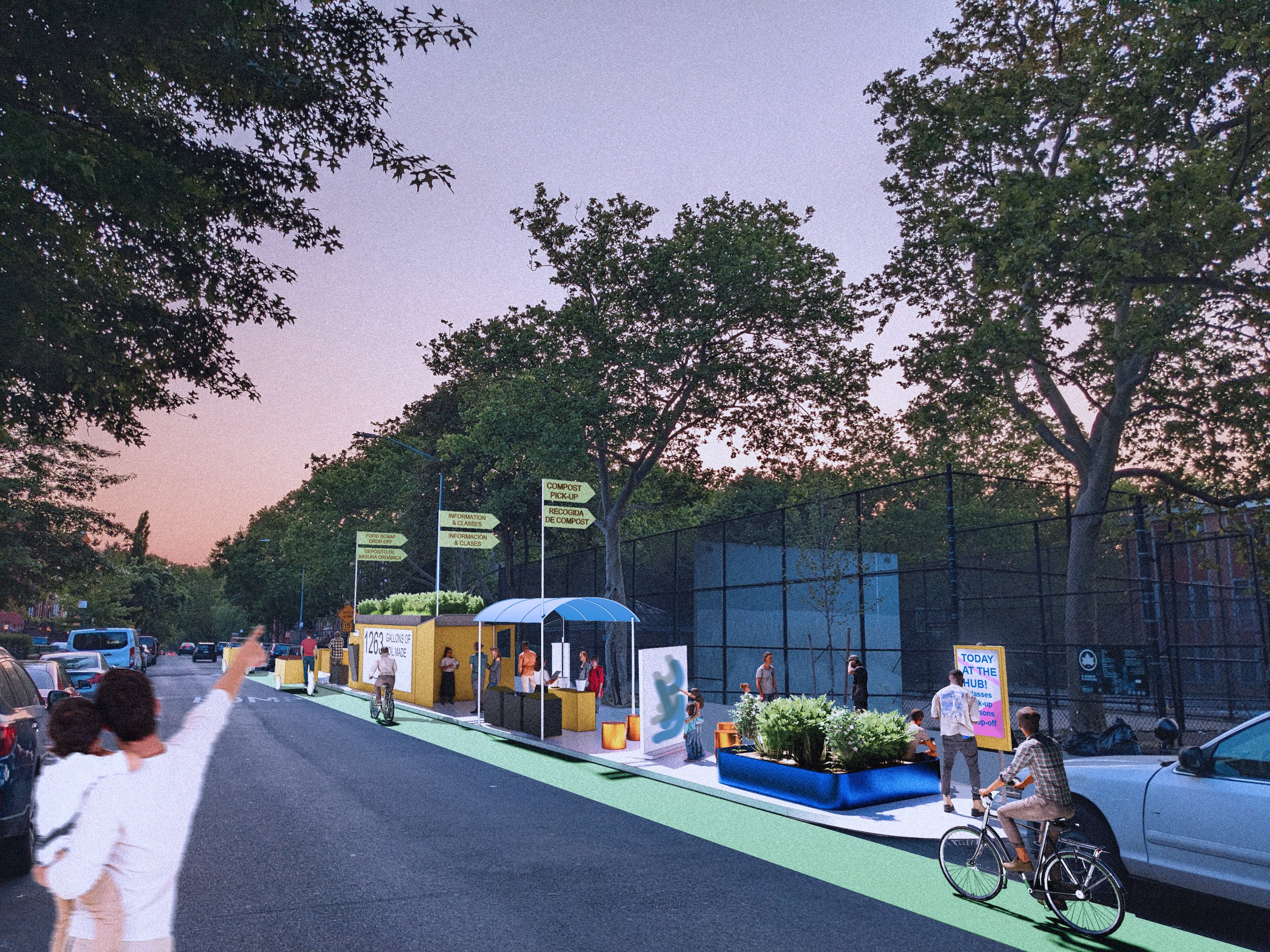
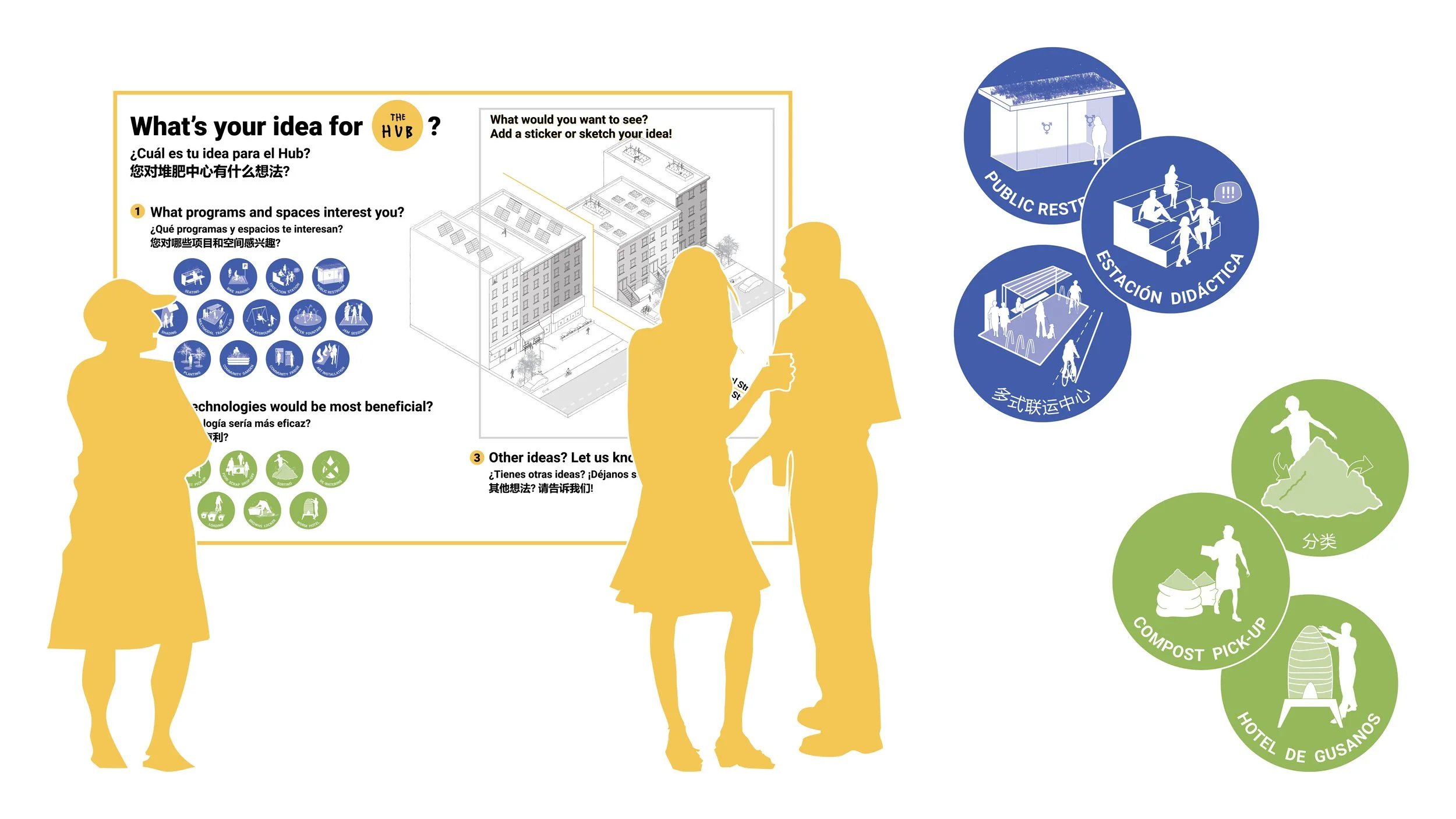
Designed with residents and community composters, these spaces serve as collection points, educational sites, and social anchors—linking the community, producers, haulers, and processors in a circular, visible system.
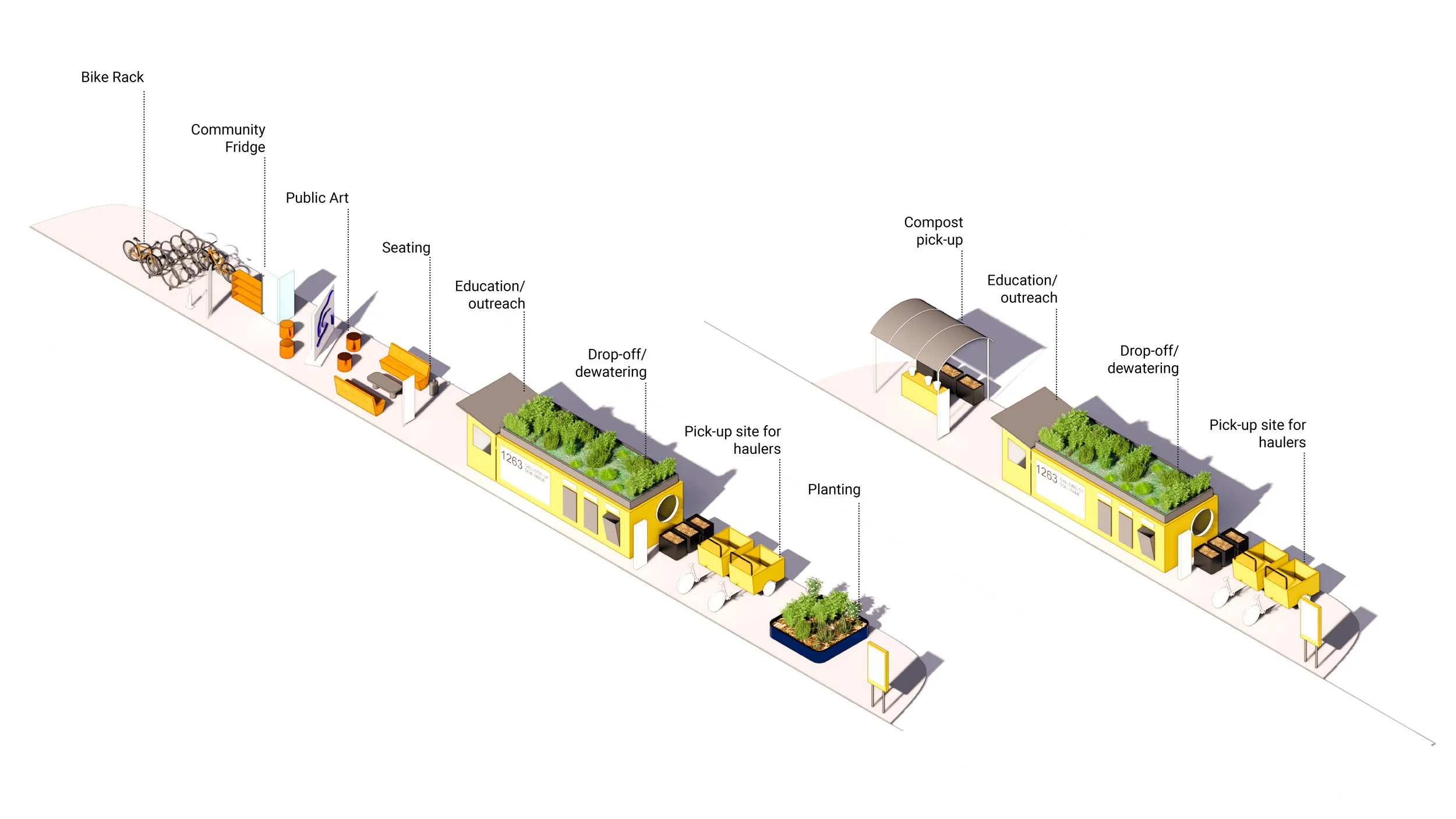
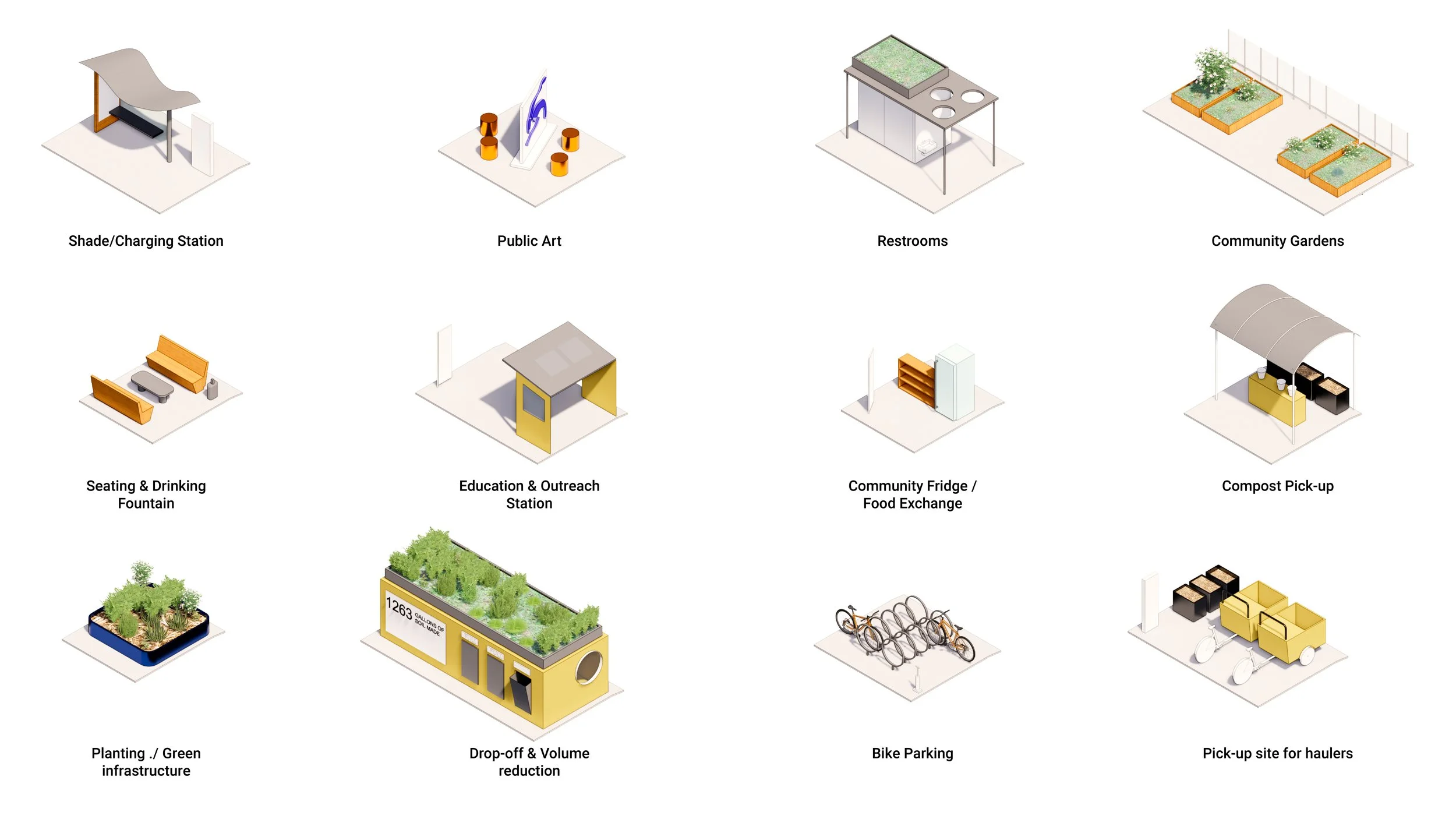
We designed a citywide organics collection framework, programming components to be assembled as hubs, and community outreach materials to gather feedback from local stakeholders.
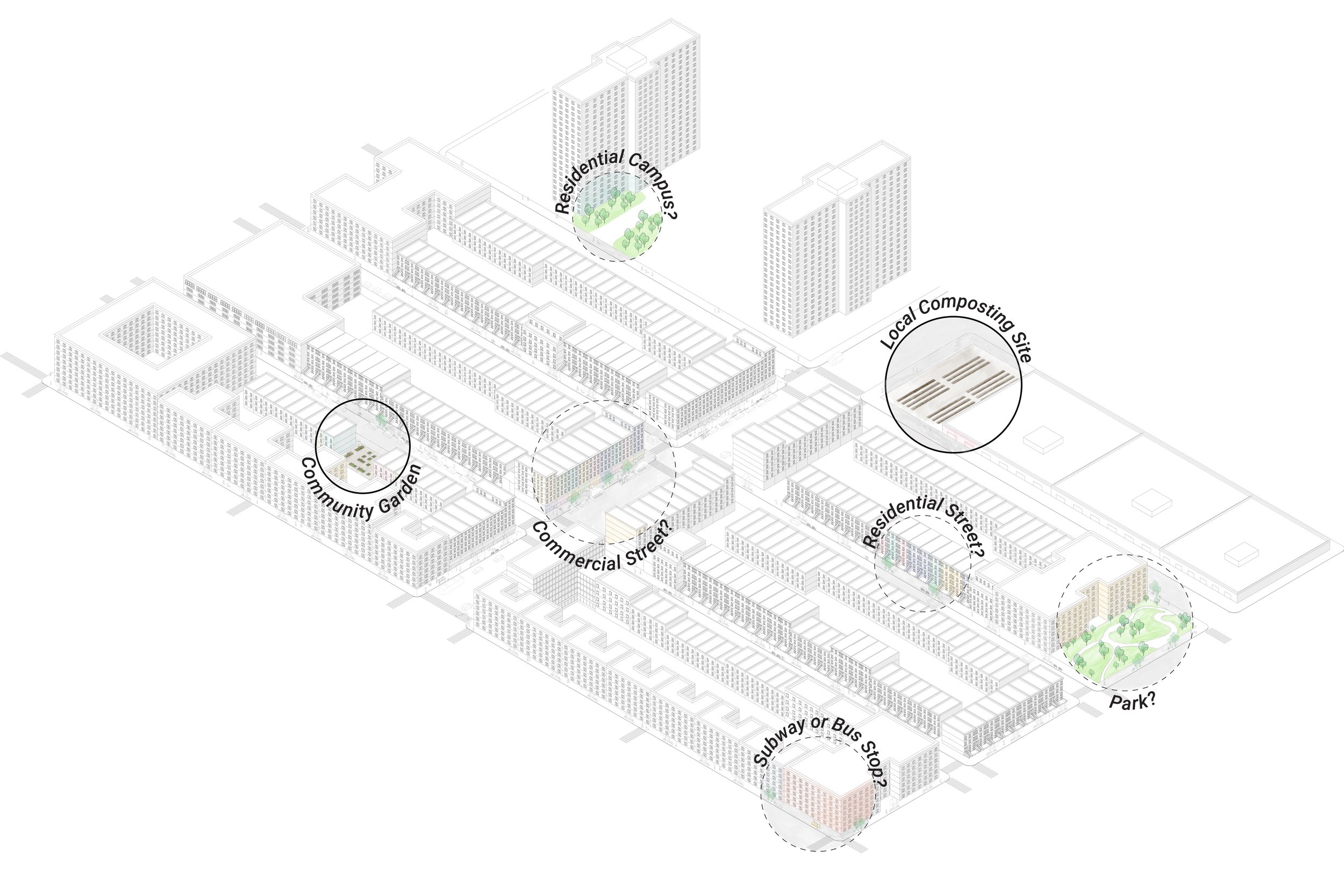
While part of a citywide system, each hub responds to the specific needs of its neighborhood. The framework is macro, but there is still a focus on micro through localized permutations and flexibility. The diagrams illustrate possible programming and assemblies at multiple scales.
By inviting micro-hauling, localized processing, and public participation, the Loop reduces local truck traffic and C02 emissions while positioning compost not just as waste—but as civic infrastructure for a more connected and climate-conscious city.